The Hustle Trap: How to Build a Real Business |
 |
|
Let us be honest: we celebrate the hustle, but we rarely define it.
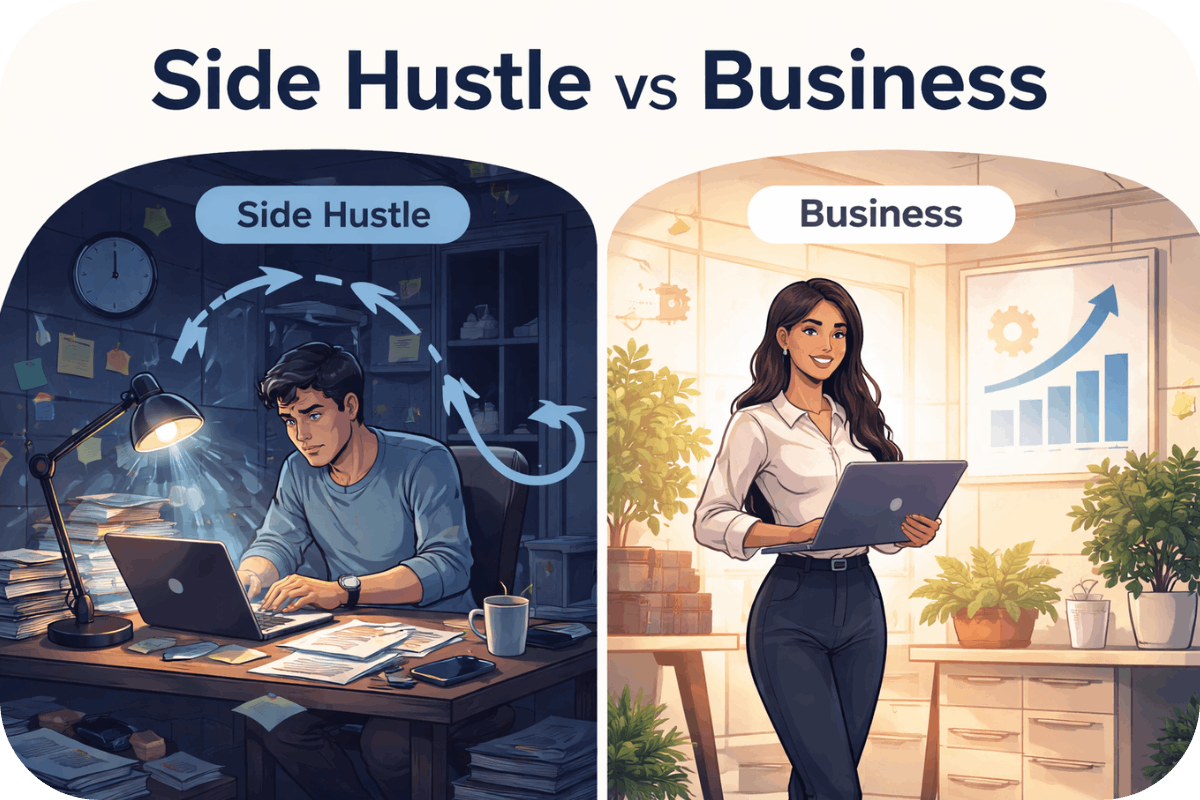
That is why so many self-proclaimed 'business owners' are stuck. They burn the candle at both ends, treat each day like a sprint, and wonder why the finish line never gets closer. What they have is not a business. It is a personalized grind disguised as entrepreneurship. This is not a critique of hard work. Hustling is how every venture begins. But there comes a turning point, one that many never reach, where you must decide: will you stay a one-person engine, or else will you build something that can run without you? The Anatomy of a Hustle: You as the Product A hustle is simple: you trade your time and energy for money. It is you-powered. If you are not working, income stops. There is no system, no predictability, no leverage. It is just effort in, cash out. Your hustle probably looks like this: • You handle everything. Service, sales, marketing, admin. • Clients depend on you, not your process or else reputation. • Income fluctuates wildly, tied entirely to your daily output. • Scaling means longer hours, not smarter operations. A hustle can sustain you, but it cannot free you. It is a job you created for yourself, often more demanding than the one you left. What a Business Actually Is: The System is the Product A business is system powered. It is built on structure, not just stamina. It can operate and grow without your constant direct involvement. The value is no longer tied to your personal labor, but to a repeatable, reliable process. A real business has: • Clear, consistent pricing, not guesswork or else negotiation every time. • Documented workflows, so tasks can be delegated or else automated. • Defined roles, even if you are playing multiple parts now. • Predictable revenue streams, not just project-to-project survival. The core difference? A hustle survives on effort. A business survives on architecture. Why You Are Still Stuck in the Hustle Cycle (It Is Not What You Think) The shift from hustle to business is not blocked by a lack of skill or else opportunity. It is sabotaged by psychology. Hustling feels heroic. It is immediate, reactive, and adrenaline-fueled. Putting out fires, landing last-minute clients, working until midnight it provides a daily sense of accomplishment. Building systems feels slow, boring, and abstract. Documenting a process does not give you a rush. Turning down a mismatched client feels like losing money. Raising prices feels risky. Hustling rewards you today. Building a business rewards you in a year. Most people choose the immediate hit over the long-term gain, until they burn out. The Pivot Question That Changes Everything Your escape from the hustle trap begins with a single shift in perspective. Stop asking: 'How can I make more money this week?' Start asking: 'How can this run without me this month?' That question changes everything. • Pricing becomes about value, not hours. • Clients become partners in your process, not emergencies to solve. • Your time becomes an investment in growth, not just production. Suddenly, you are not just working in your business. You are working on it. Where to Start: Your First Brick in the Wall Every business begins as a hustle. The separation happens when you build your first real system. Choose one area that currently depends entirely on you and systematize it. • A sales script or else proposal template. • An onboarding checklist for new clients. • A content calendar or else marketing workflow. • Standardized pricing packages. Document it. Name it. Then follow it, exactly. The Choice Is Yours You can continue hustling, working harder, trading hours for dollars, and hitting the same revenue ceiling year after year. Or you can start building, investing time now into structures that will pay you back in freedom, stability, and scalable growth later. Your business should not be a cage you built yourself. It should be an engine that runs on the fuel of your ideas, not the exhaustion of your effort. The difference is not in your work ethic. It is in your blueprint. |
|
|
| Go to top |
Like or Follow us on


|